Medically reviewed by Dr. Samuel Davidoff, MD, Board-Certified Gastroenterologist | 18+ Years Experience | Last Updated: May 2026
Quick Answer
The combined procedure itself takes 15 to 45 minutes (about 5 to 15 minutes for the upper endoscopy plus 15 to 30 minutes for the colonoscopy). Plan 2 to 3 hours total at the facility for check-in, IV start, the procedure, and 45 to 60 minutes of sedation recovery. As Dr. Yuriy Israel at Gastroenterology & Nutrition, P.C. explains, the upper endoscopy is performed first, immediately followed by the colonoscopy under a single sedation event. You will not be able to drive, work, sign legal documents, or drink alcohol for 24 hours after sedation. To schedule, call our Forest Hills office at (718) 261-0900.
What Is a Combined Upper Endoscopy and Colonoscopy?
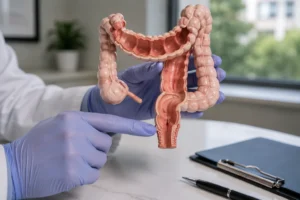
A combined procedure is two diagnostic endoscopies performed back-to-back during a single visit, under one round of sedation. The upper endoscopy (esophagogastroduodenoscopy, or EGD) uses a thin flexible camera to examine the esophagus, stomach, and the first part of the small intestine. The colonoscopy uses a similar instrument from the other end to inspect the colon for abnormalities, including polyps, inflammation, and early cancer.
Both procedures share the same prep, the same IV, the same sedation, and the same recovery room visit. From your perspective as the patient, it is one experience.
Why Doctors Recommend Doing Both Procedures on the Same Day
The medical case for same-day combined procedures is strong. A 2019 Johns Hopkins study published in JAMA Internal Medicine analyzed more than 4 million procedure pairs and concluded that, when both are clinically indicated, performing them on the same day is safer (one sedation exposure instead of two), more convenient, and more cost-effective for both patients and the healthcare system. The study estimated more than $9 million in annual cost savings if same-day pairing were used universally where appropriate.
Specific advantages for patients:
- One sedation event instead of two reduces total anesthesia exposure.
- One bowel prep instead of two skips a second round of the laxative regimen.
- One day off work instead of two for prep and procedure.
- One escort needed instead of two.
- Lower combined cost with one facility fee instead of two.
Step-by-Step Timeline of the Combined Procedure
Here is what to expect from the moment you start prep until you go home.
Before You Arrive
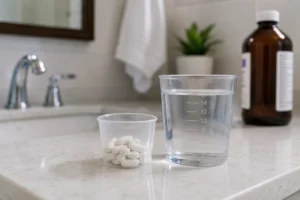
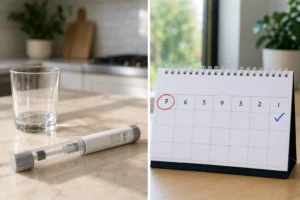
Bowel prep is the most demanding part. You start the day before with clear liquids only (no red, purple, or blue dyes), then drink your prescribed prep solution in two split doses (typically the evening before and 4 to 6 hours before arrival). Stop solid food 8 hours before, stop clear liquids 2 hours before. Adjust or hold blood thinners, diabetes meds, GLP-1s (Ozempic, Wegovy), and iron supplements per your gastroenterologist’s instructions.
At the Office: Check-In and Pre-Procedure (30 to 45 Minutes)
Plan to arrive 30 to 45 minutes before your scheduled procedure time. You will register, change into a gown, have your vital signs taken, and meet with the nurse and anesthesiologist or anesthetist. An IV is placed for sedation, and your medical history, allergies, and current medications are reviewed.
During the Endoscopy (5 to 15 Minutes, Upper First)
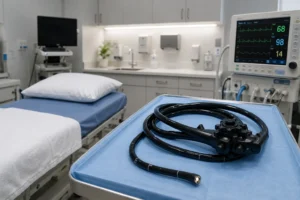
The upper endoscopy is performed first. You will be lying on your left side. The endoscope is gently passed through the mouth, down the esophagus, into the stomach, and to the first portion of the small intestine. Most patients feel nothing, since sedation is in effect. The camera takes images, and biopsies are taken if needed for conditions such as Gastroesophageal reflux disease (GERD), ulcers, or celiac disease.
During the Colonoscopy (15 to 30 Minutes)
Immediately after the endoscope is removed, the colonoscopy begins. The colonoscope is passed through the rectum and advanced through the entire colon to the cecum (the junction with the small intestine). The doctor examines the lining for polyps, colorectal cancer, signs of inflammatory bowel diseases, hemorrhoids, and other findings. Polyps can be removed during the same procedure.
Recovery Room (45 to 60 Minutes for Sedation Wear-Off)
You wake up in a recovery area as the sedation wears off. Your blood pressure, heart rate, and oxygen are monitored. Most patients feel groggy for the first 30 minutes and clear-headed by the end of the recovery period. The doctor reviews initial findings with you and gives you discharge instructions, though you may not remember them well due to sedation amnesia (your driver should be present).
Going Home (Escort Required, 24-Hour Rules)
You must have a designated driver to leave the facility. Public transportation and rideshare are not accepted as a substitute at most centers. For the next 24 hours, do not drive, operate machinery, drink alcohol, or sign legal documents. Most patients return to a normal diet within a few hours and resume normal activities the next day. For more on what the day after looks like, see our guide to recovering from an upper endoscopy.
Sedation Options for the Combined Procedure
The standard at most US gastroenterology offices for a combined upper endoscopy and colonoscopy is moderate-to-deep IV sedation, typically a combination of propofol, midazolam, or fentanyl, administered by an anesthesiologist or certified registered nurse anesthetist. Most patients are unaware of either procedure and have no memory of it.
Some practices in other countries (notably the UK) offer alternatives like local throat numbing for the upper endoscopy or inhaled Entonox (nitrous oxide) for the colonoscopy, which can let patients drive home shortly after. These are less common in the US, where a single IV sedation event for both procedures is the norm. When you schedule, our team will explain exactly which sedation approach will be used at your appointment.
Risks and What to Watch For After the Procedure
Combined upper endoscopy and colonoscopy is a very safe procedure. The most serious risks are uncommon:
- Perforation (a tear in the GI lining): roughly 1 in 1,500 colonoscopies, even less common for upper endoscopy alone.
- Bleeding, usually after polyp removal or biopsy: low risk, often self-resolving.
- Reaction to sedation: rare, monitored continuously during the procedure.
- Aspiration: minimized by the strict 2-hour clear-liquid fasting rule.
- Infection: very rare with modern sterilization protocols.
Call our office at (718) 261-0900 or go to the emergency room if you develop severe abdominal or chest pain, fever above 100.4°F, persistent vomiting, blood in vomit, large amounts of rectal bleeding, black tarry stool, dizziness, or difficulty breathing in the days after the procedure.
Cost and Insurance: What to Expect on Your Bill
Costs for a combined upper endoscopy and colonoscopy in the United States range nationally from approximately $2,346 to $10,221, depending on facility type (ambulatory surgery center vs hospital), insurance coverage, sedation type, and whether biopsies or polyp removals are performed. Same-day combined procedures usually cost less than two separate procedures because there is only one facility fee.
Insurance coverage varies. Most US health plans cover screening colonoscopies in full per the Affordable Care Act, but a same-day diagnostic upper endoscopy may be billed separately. For specific cost and insurance verification at our office, call our team and they will check your benefits before your procedure.
Visit Gastroenterology & Nutrition P.C. in Forest Hills, Queens
If you have been told you need both an upper endoscopy and a colonoscopy, our team can typically schedule both at the same visit, with one bowel prep and one sedation event. Dr. Samuel Davidoff and the gastroenterology team at Gastroenterology & Nutrition, P.C. have served the Forest Hills community for over 20 years. You can schedule a colonoscopy directly, or read more on our upper endoscopy procedure page. For combined-procedure logistics, see the combined procedures section on our endoscopy hub.
Address: 108-16 72nd Avenue, 2nd Floor, Forest Hills, NY 11375
Phone: (718) 261-0900
Hours: Sunday 9 AM to 1 PM, Monday/Wednesday/Thursday 9 AM to 5 PM, Tuesday/Friday 9 AM to 4 PM
Neighborhoods we serve: Forest Hills, Rego Park, Kew Gardens, Elmhurst, Jackson Heights, Middle Village, Ridgewood, Astoria, Flushing, Richmond Hill, Glendale, and surrounding Queens communities. Same-week scheduling, Sunday hours, and Spanish-speaking staff at the front desk.
Frequently Asked Questions
Can endoscopy and colonoscopy be done at the same time?
Yes. The upper endoscopy is performed first while you are sedated, immediately followed by the colonoscopy in the same session. You receive sedation only once and recover only once.
How long does a colonoscopy and endoscopy take including recovery?
The combined procedure itself takes 15 to 45 minutes. Plan on 2 to 3 hours total at the facility, including check-in, IV start, procedure, and 45 to 60 minutes of sedation recovery. You should not drive, work, or sign legal documents for 24 hours after sedation.
Which procedure is done first, the endoscopy or the colonoscopy?
The upper endoscopy is performed first, followed immediately by the colonoscopy. This sequence is standard practice because it limits the time the airway is exposed and keeps both procedures under one sedation event.
Will I be asleep during a combined endoscopy and colonoscopy?
Most patients receive moderate-to-deep IV sedation (typically propofol, midazolam, or fentanyl) and have no awareness of either procedure. Some practices offer alternatives like local throat numbing for the endoscopy, but the standard at most US gastroenterology offices is full IV sedation.
Is it safe to combine the two procedures?
Yes. Doing both procedures the same day reduces total sedation exposure compared with two separate visits. A 2019 Johns Hopkins / JAMA Internal Medicine study concluded that, when clinically appropriate, same-day scheduling is safer and more cost-effective than splitting the procedures.
¿Cuanto dura una endoscopia y colonoscopia juntas?
La endoscopia y colonoscopia combinadas duran de 15 a 45 minutos. Planee de 2 a 3 horas en total en la oficina, incluyendo la recuperacion de la sedacion. No podra conducir, trabajar, ni firmar documentos legales durante 24 horas despues de la sedacion. Para programar una cita, llame a nuestra oficina en Forest Hills al (718) 261-0900. Contamos con personal que habla espanol.
This information is provided for educational purposes and is not a substitute for professional medical advice, diagnosis, or treatment. Please schedule a consultation with our team to discuss your individual needs.