Procedure Length
About 5 to 7 minutes
Full visit roughly 1 to 1.5 hours with IV and recovery
Endoscopy & Prep · Forest Hills, Queens
Expert diagnosis and treatment of upper digestive issues at our Forest Hills, Queens office
(718) 261-0900Medically reviewed by Dr. Yuriy Israel, MD, Board-Certified Gastroenterologist & Internal Medicine | 15+ Years Experience | Last Updated: April 2026
Our Forest Hills Upper Endoscopy Practice at a Glance
Here's what patients should know before booking an upper endoscopy with us.
Procedure Length
About 5 to 7 minutes
Full visit roughly 1 to 1.5 hours with IV and recovery
Sedation
Propofol, deep sleep
You feel nothing and the gag reflex is suppressed
NPO Before Procedure
No food or drink 8 to 10 hours before
Stop after dinner the night before
GLP-1 Medication Stop
Stop Ozempic or Mounjaro 1 week prior
GLP-1 drugs slow digestion and affect stomach emptying
Recovery Time
About 20 to 30 minutes after sedation
Most patients return to normal activities after
Biopsies
Always taken during the procedure
Many upper GI conditions (H. pylori, gastritis, celiac, ulcers) need microscopic diagnosis
Facility
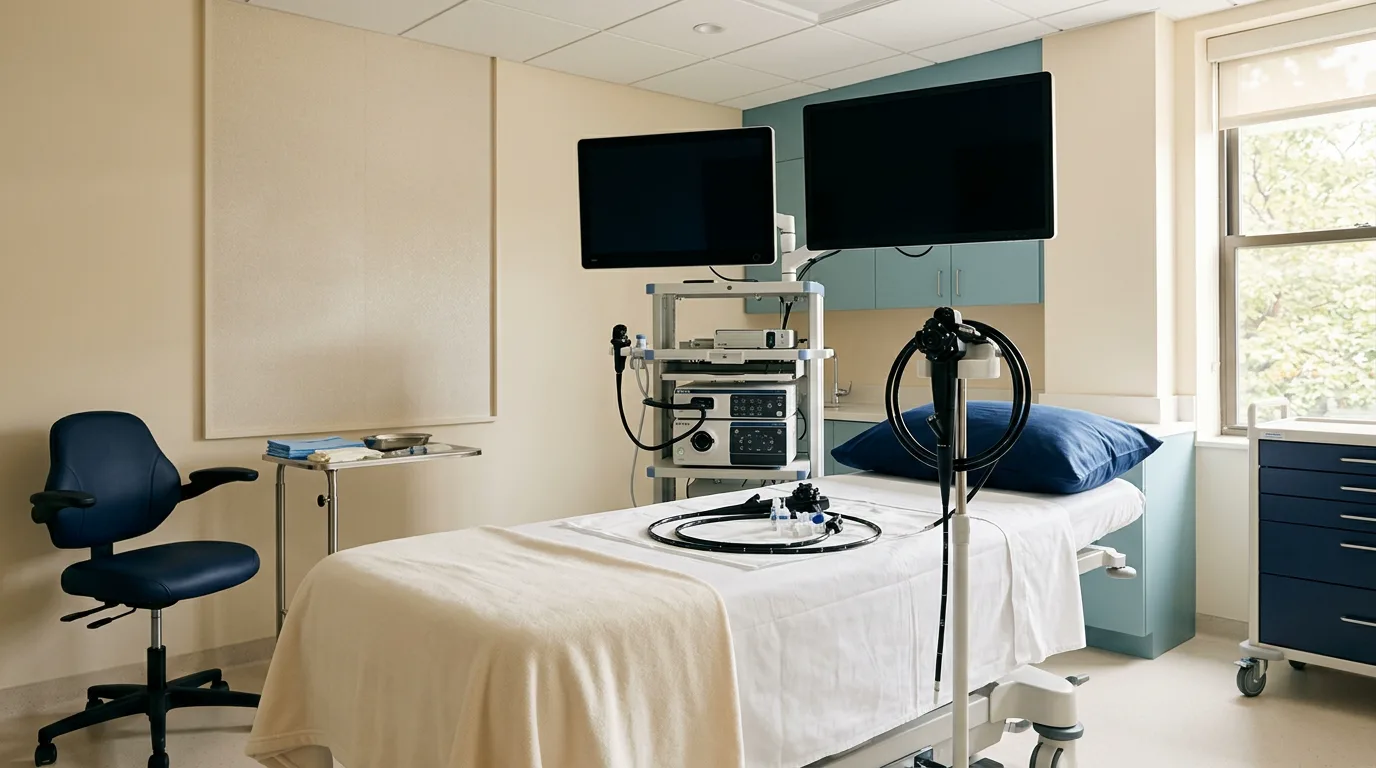
AAAASF-accredited endoscopy suite
Forest Hills, Queens, patient safety and comfort top priority
Lead Provider
Dr. Yuriy Israel, MD
Board-Certified Gastroenterologist and Internal Medicine, 15+ years
Why It Matters
Upper Endoscopy (also known as EGD, or esophagogastroduodenoscopy) is a procedure performed at Gastroenterology and Nutrition, P.C., led by Dr. Samuel Davidoff, MD, Board-Certified in Gastroenterology and Hepatology. This procedure allows our team to examine the lining of your esophagus, stomach, and duodenum (the first portion of the small intestine).
During this procedure, a bendable, lighted tube about the thickness of your little finger is gently placed through your mouth and into the stomach and duodenum. This provides a clear view of your upper digestive tract and allows for the diagnosis of various conditions.
This procedure is performed with sedation, making it comfortable for patients. Most people have little to no recollection of the procedure itself.
Timing
Use the situations below to gauge timing. Always confirm with your gastroenterologist.
An upper endoscopy can check for reflux esophagitis, ulcers, H. pylori gastritis, or Barrett's esophagus, common causes when antacids fail.
Schedule an evaluationYes. Difficulty swallowing is a primary indication for upper endoscopy to look for esophageal narrowing, rings, strictures, or other obstructions.
Call usUrgent. These signs typically indicate upper GI bleeding from an ulcer or other lesion. Seek evaluation right away.
Call (718) 261-0900Yes. Long-standing reflux is a Barrett's esophagus risk factor. An upper endoscopy lets us inspect and biopsy the lower esophagus to evaluate for changes in the lining.
Persistent upper abdominal pain, especially after meals, can signal ulcers or gastritis. An upper endoscopy examines the stomach lining and takes biopsies to confirm the diagnosis.
Stop GLP-1 medications at least 1 week before the procedure. These drugs slow digestion, which can affect stomach emptying and procedural safety.
This guidance is for general education and does not replace evaluation by a board-certified gastroenterologist. Recommendations vary by individual history, symptoms, and risk factors. Call (718) 261-0900 to discuss your specific situation.
“Upper endoscopy is one of those procedures where a few minutes on the table tells us more than months of guessing. When someone has reflux that won’t quit, trouble swallowing, or unexplained nausea, this is how we get a real answer and a real plan.”
Reasons
Helps diagnose persistent upper abdominal pain, nausea, vomiting, difficulty swallowing (dysphagia), heartburn, or unexplained weight loss.
Excellent method for finding the cause of bleeding from the upper gastrointestinal tract with greater accuracy than X-rays.
Allows for collection of tissue samples to distinguish between cancerous and non-cancerous conditions, detect early cancer, or diagnose infections.
More accurate than X-rays for detecting inflammation, ulcers, or tumors of the esophagus, stomach, and duodenum.
A biopsy may be taken during your endoscopy for many reasons and does not necessarily mean that cancer is suspected. Biopsies help diagnose various conditions including infections and inflammation.
Before undergoing the procedure, please inform Dr. Davidoff about any pre-existing or current medical conditions that may affect your eligibility for an upper endoscopy, including pregnancy, allergies to medications, or use of blood thinners.
Walkthrough

Proper preparation is essential for a successful upper endoscopy. The stomach should be completely empty to allow for clear visualization.
Transportation Required
You will be sedated during the procedure, so you must arrange for someone to drive you home afterward. Sedatives affect your judgment and reflexes for the remainder of the day, so you should not drive or operate machinery until the next day.
The upper endoscopy procedure is straightforward and typically takes between 3-15 minutes to complete.
Comfort is Our Priority
Most patients have little to no memory of the procedure due to the sedation. Our team monitors you closely throughout to ensure your comfort and safety.
Recovery from an upper endoscopy is typically quick and straightforward:
After-Care Instructions
Don't drive or make important decisions for 24 hours after the procedure. If you experience severe pain, fever, difficulty swallowing, or notice unusual symptoms after your procedure, contact our office immediately at 718-261-0900.
Safety
Upper endoscopy is generally considered a very safe procedure with minimal risks. However, as with any medical procedure, there are certain rare complications you should be aware of:
A biopsy may be taken during your endoscopy for many reasons and does not necessarily mean that cancer is suspected. Biopsies help diagnose various conditions including infections and inflammation.
Before undergoing the procedure, please inform Dr. Davidoff about any pre-existing or current medical conditions that may affect your eligibility for an upper endoscopy, including pregnancy, allergies to medications, or use of blood thinners.
What Our Patients Say
Real experiences from patients who've had upper endoscopies at our Forest Hills practice.
“I was extremely nervous about having an upper endoscopy, but Dr. Davidoff and his team at the Forest Hills office were incredible. They explained everything clearly beforehand, answered all my questions, and made me feel completely at ease. The procedure was quick and I didn't feel a thing, I was worried for nothing! The results helped identify the cause of my stomach pain, and now I'm finally getting proper treatment. I would recommend Dr. Davidoff to anyone needing this procedure.”
Michael R.
Queens, NY
FAQ
We understand you may have concerns about your procedure. Here are answers to questions our Forest Hills patients frequently ask.
Insurance Coverage
We understand you may have concerns about your procedure. Here are answers to questions our Forest Hills patients frequently ask.
Not seeing your insurance provider? Call our Forest Hills office at 718-261-0900 to verify coverage.
Check Your CoverageDon't Wait
Don't wait to address persistent upper digestive issues. Contact us today to schedule your consultation with Dr. Davidoff.
Same-week appointments available at our Forest Hills office. Most insurance plans accepted.
Book Your Visit
Complete the form below, and our team at 108-16 72nd Ave, Forest Hills will contact you within one business day to confirm your appointment with Dr. Davidoff.
Medical Disclaimer: The upper endoscopy information on this page is for general educational purposes only and does not substitute for individualized medical advice from your physician. Fasting requirements, medication instructions, and sedation considerations vary by patient. Always follow the specific pre-procedure instructions provided by your doctor or our clinical team. Call us at (718) 261-0900 with any questions.