
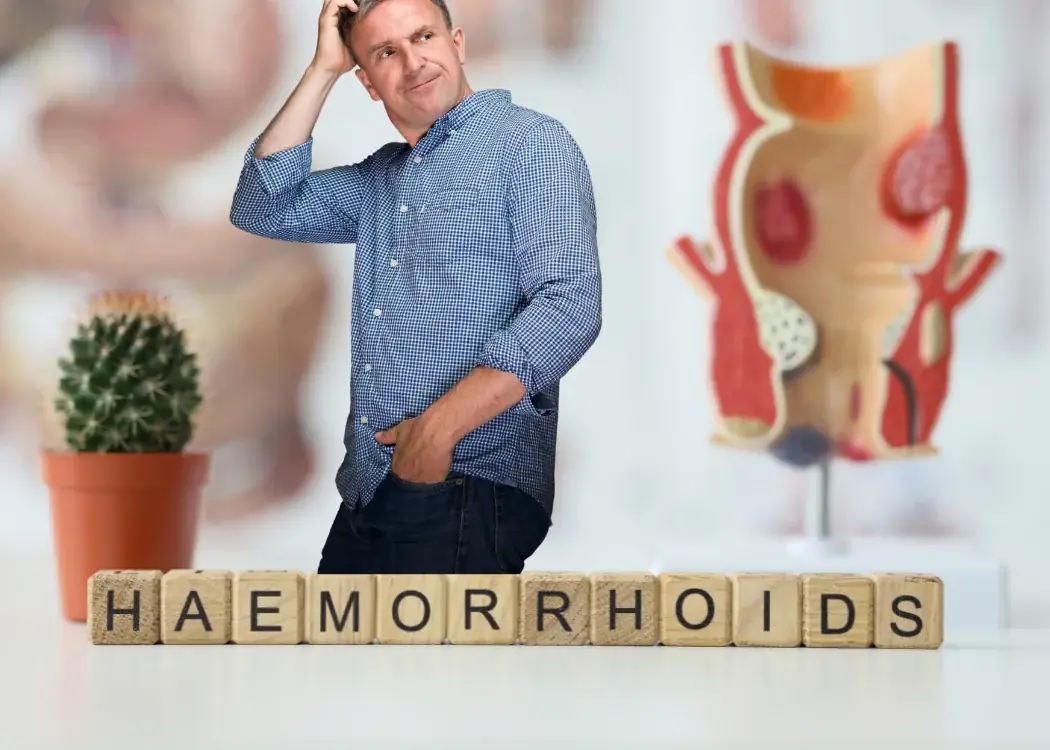
Patient Education · Forest Hills, Queens
How Long Does It Take for Hemorrhoids to Go Away?
Most hemorrhoids go away on their own in a few days to a couple of weeks. Small internal ones often settle within a week. Uncomplicated external hemorrhoids usually take about two to four weeks. Thrombosed (clotted) hemorrhoids hurt the most in the first few days and reabsorb over two to three weeks. Larger internal hemorrhoids that keep bleeding or protruding often need an in-office treatment to fully resolve.
(718) 261-0900Medically reviewed by Dr. Yuriy Israel, MD, Gastroenterologist | 10+ Years Experience | Last Updated: September 2026
The timeline depends on the type of hemorrhoid and how well you keep pressure off it while it heals. Below is what to expect for each type, what speeds recovery, and the point at which a hemorrhoid that will not heal should be looked at by a gastroenterologist.
Hemorrhoid Healing Timeline by Type
- Small internal (grade 1): A few days to about a week, often with home care alone.
- Larger or prolapsing internal (grade 2 to 4): Weeks; grade 3 and 4 frequently need an in-office procedure.
- External, uncomplicated: Small ones in days; larger ones about two to four weeks.
- Thrombosed external (clotted): Pain peaks in 48 to 72 hours; the clot reabsorbs over two to three weeks.
- After rubber band ligation: Soreness for roughly a week; full healing in one to two weeks.
Internal hemorrhoids sit above the point where you feel pain, so they are more likely to bleed than to hurt, and small ones often clear quietly. External hemorrhoids sit under sensitive skin, which is why they are the ones people notice and why they can take the longest.
Dr. Israel on How Long External Hemorrhoids Take to Heal
External hemorrhoids are the type most patients are asking about when they search this question, because they are the ones you can feel.
As Dr. Yuriy Israel explains:
External hemorrhoids usually take about three to four weeks to fully go away, provided you avoid aggravating them. Pushing and straining due to constipation, heavy lifting, or prolonged sitting can aggravate hemorrhoids. Maintaining soft stools with laxatives and avoiding heavy lifting can help them heal faster.
That last point is the whole game. A hemorrhoid heals when the vein is no longer under pressure. Every hard bowel movement, long sit on the toilet, or heavy lift resets the clock.
What Makes Hemorrhoids Heal Faster: Soft Stools, No Straining, No Heavy Lifting
You can shorten recovery by removing the pressure that caused the hemorrhoid in the first place:
- Keep stools soft. Eat more fiber from fruits, vegetables, whole grains, and legumes, and drink enough water. A short course of a stool softener or bulk-forming fiber supplement helps when diet alone is not enough.
- Do not strain or linger on the toilet. Go when you feel the urge, and get up when you are done. Reading on the toilet keeps the veins under pressure.
- Take warm sitz baths. Sitting in warm water for 15 to 20 minutes a few times a day eases itching and swelling.
- Use over-the-counter relief. Creams, ointments, medicated witch hazel wipes, and short-term hydrocortisone products reduce burning and swelling while the hemorrhoid heals.
- Skip heavy lifting until it settles. Straining to lift raises abdominal pressure the same way straining to pass stool does.
If a thrombosed hemorrhoid is keeping you up at night, positioning and a numbing cream can help until you are seen. We cover this in detail in our guide on how to sleep with hemorrhoids.
Why Your Hemorrhoid Isn't Healing After Three Weeks
If you have followed home care and the hemorrhoid is still there after three to four weeks, one of a few things is usually going on:
- The pressure never came off. Ongoing constipation, daily straining, long toilet sits, or heavy lifting keeps re-irritating the same vein.
- It is larger than home care can fix. Grade 3 and 4 internal hemorrhoids that prolapse (bulge out) often will not fully retract or resolve without a procedure.
- It is not only a hemorrhoid. Rectal bleeding, itching, and discomfort can come from fissures, and sometimes from conditions that need to be ruled out. That is why a persistent case is worth an exam rather than another month of guessing.
Rectal Bleeding That Doesn't Stop Needs an Exam to Rule Out Other Causes
Most hemorrhoids are harmless and temporary. A few situations, though, are worth a call to a gastroenterologist rather than waiting them out:
- Bleeding that keeps happening or is heavy. Minor spotting on toilet paper is common with hemorrhoids, but repeated or heavy bleeding should be checked, because the same symptom can come from colorectal polyps or cancer.
- Pain or discomfort that does not improve after a week or two of home care.
- A hemorrhoid that protrudes and will not go back in. Prolapsed hemorrhoids often need an in-office procedure.
- Sudden, severe pain and a firm lump. This can be a thrombosed hemorrhoid, and treatment is most effective in the first 48 to 72 hours.
- You are not sure it is a hemorrhoid at all. An exam settles the question quickly.
Bringing up anorectal symptoms feels awkward, and many people put it off for exactly that reason. Dr. Israel evaluates hemorrhoids in a straightforward, judgment-free way and takes the time to make sure nothing more serious is being missed. Hemorrhoids do not cause abdominal pain or turn into cancer, but the bleeding they cause can look identical to bleeding that does matter, so it is worth being sure. See our note on whether hemorrhoids cause stomach pain for more.
Hemorrhoid Treatments That Speed Recovery When Home Care Stalls
When a hemorrhoid will not resolve on its own, in-office options can finish the job:
- Rubber band ligation places a small band at the base of an internal hemorrhoid so it shrinks and falls off, usually with about a week of mild soreness.
- Infrared coagulation shrinks smaller internal hemorrhoids.
- Surgical removal is reserved for large or persistent cases.
These are done as a separate, planned visit rather than during a colonoscopy, so the area can be treated properly while you are awake and comfortable. We explain the reasoning in can hemorrhoids be removed during a colonoscopy. You can also read more about the condition on our hemorrhoids page.
Talk to a Gastroenterologist in Forest Hills
If your hemorrhoid is not improving after a couple of weeks, is bleeding, or is painful enough to disrupt your day, you do not have to wait it out. Dr. Yuriy Israel and the team at Gastroenterology & Nutrition, P.C. in Forest Hills, Queens offer same-week consultations and Sunday procedure hours, and accept most major insurance. Call (718) 261-0900 or schedule a consultation.
Disclaimer: This information is provided for educational purposes and is not a substitute for professional medical advice, diagnosis, or treatment. Please schedule a consultation with our team to discuss your individual needs.
Sources
- National Institute of Diabetes and Digestive and Kidney Diseases (NIDDK), Hemorrhoids: niddk.nih.gov
- Medical News Today, How long do hemorrhoids last? Treatment and recovery: medicalnewstoday.com
- Cleveland Clinic, Hemorrhoids: Symptoms, Causes and Treatment: my.clevelandclinic.org
FAQ
Frequently Asked Questions
Gastroenterology & Nutrition, P.C. · Forest Hills, Queens
Ready to Schedule Your Appointment?
Same-week consultations. Sunday procedures offered. Most major insurance accepted.