Medically reviewed by Dr. Samuel Davidoff, MD, Board-Certified Gastroenterologist | 18+ Years Experience | Last Updated: May 2026
Quick Answer
No, do not drink water within 2 hours of your scheduled upper endoscopy time. Most patients should follow an 8-hour no-food and 2-hour no-clear-liquid rule. As Dr. Yuriy Israel at Gastroenterology & Nutrition, P.C. explains, “No, you cannot drink anything for at least 8 to 10 hours before the procedure” if your office uses an extended fasting window. If you accidentally took a small sip more than 2 hours before, you are likely fine, but call our office at (718) 261-0900 immediately to confirm. If you drank within the 2-hour window, the procedure may need to be rescheduled to prevent aspiration during sedation.
Accidentally Drank Water Before Your Endoscopy? Do This Now
If you broke your fast by accident, do not skip the appointment without calling first. The decision to proceed, delay, or reschedule depends on three things: how much you drank, exactly when you drank it, and the type of sedation planned for your upper endoscopy.
Step 1, Note Exactly What and When You Drank
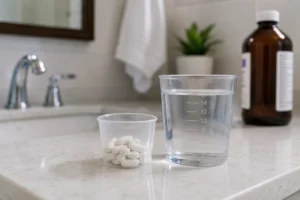
Write down two things: the volume (a sip, a cup, more) and the clock time. Be honest. Anesthesiologists make the call based on real numbers; underestimating raises your risk of aspiration. Plain water counts as a clear liquid. Coffee with milk, juice with pulp, smoothies, and broth with solids do not count and are treated like food.
Step 2, Call Your Gastroenterologist Before You Leave
Call our Forest Hills office at (718) 261-0900 before you drive to the appointment. Give them the volume, the time, and what you drank. The endoscopy team will tell you whether to come in on schedule, arrive at a later time, or reschedule.
Step 3, What Happens if the Procedure Is Rescheduled
A reschedule is not a setback. The risk of vomiting and inhaling stomach contents during sedation, called aspiration pneumonia, is the reason for the rule. Your team will pick the next available slot, often within a few days, and walk you through the full prep again.
When a Small Sip of Water Is Okay
If you took a small sip (under 1 to 2 oz) more than 2 hours before your arrival time to swallow a critical morning medication that your gastroenterologist already approved, the procedure usually proceeds as planned. The 2-hour clear-liquid window is the line; outside it, with approved medication, sips are tolerated.
How Many Hours Before an Upper Endoscopy Can You Drink Water?
Modern fasting guidance follows a countdown. The numbers below match the American Society of Anesthesiologists NPO guidelines and our own protocols at Gastroenterology & Nutrition, P.C. Always confirm with the office that scheduled your procedure, because some patients on GLP-1 medications or with delayed gastric emptying need extended windows.
24 Hours Before: Light Meal, No Alcohol
Eat a normal but light meal. Avoid alcohol, large fatty meals, and high-fiber foods (raw vegetables, nuts, seeds, popcorn) that linger in the stomach. Heavy or greasy food the night before delays emptying and can leave residue that obscures the view.
8 Hours Before: Stop Solid Food, No Milk
Stop all solid food 8 hours before your arrival time. Milk and milk-based drinks (lattes, smoothies, protein shakes) count as solid food because of the fat content; stop these at the 8-hour mark too.
2 to 4 Hours Before: Water and Clear Liquids Cutoff
Stop all clear liquids, including plain water, at least 2 hours before arrival. Some practices use a 4-hour cutoff or an extended 8 to 10 hour rule for higher-risk patients; follow what your office tells you. If you take essential morning medications, you may take them with a small sip of water up to about 4 hours before, only if pre-approved.
Morning of: Critical Meds With a Small Sip Only
Take only the medications your gastroenterologist or cardiologist explicitly approved, with a small sip of plain water. Do not eat, do not drink coffee, do not drink juice, do not chew gum, do not suck on hard candy or mints.
What Counts as a Clear Liquid?
Up to the 2-hour cutoff, you can have these:
- Allowed: Plain water, apple juice, white grape juice, plain tea (no milk), black coffee (no milk or creamer), clear broth, clear sports drinks, lemon-lime sodas, Italian ice (light colors only), plain gelatin (no fruit, light colors only).
- Not allowed: Milk, cream, half-and-half, yogurt drinks, smoothies, protein shakes, orange juice with pulp, tomato juice, anything with red, purple, or blue dye (can look like blood during the procedure).
Why Fasting Before an Endoscopy Matters
The fasting rule exists to keep your airway safe during sedation and to give your gastroenterologist a clear view of the upper GI tract. Five things go wrong when prep is broken:
Vomiting During the Procedure
A full stomach combined with sedation can trigger vomiting. Vomit in a sedated, supine patient can travel into the lungs.
Aspiration Pneumonia
Inhaled stomach contents can cause aspiration pneumonia, a serious lung infection. This is the single biggest reason fasting is enforced.
Obstructed View
Food residue and milky liquids coat the stomach lining and esophagus, blocking the camera view. Small ulcers, polyps, or early cancers can be missed.
Failed Diagnosis
If the doctor cannot see the lining clearly, the procedure may be cut short and you will need to repeat it after a longer fast.
Repeat Procedure
A repeat means another day of prep, another day of sedation, and another day off work. The 2-hour rule is a small inconvenience compared to a full reschedule.
Medications to Stop or Adjust Before Your Endoscopy
Most prescription and over-the-counter medications need adjustment in the days leading up to your endoscopy. Always confirm with the prescribing physician (cardiologist for blood thinners, endocrinologist for diabetes meds) before stopping anything.
Blood Thinners (Aspirin, Plavix, Eliquis, Pradaxa, Warfarin)
These usually need to stop 3 to 7 days before, depending on the drug and your reason for taking it. Stopping a blood thinner is a cardiology decision, not a GI decision; coordinate with your cardiologist.
Diabetes Medications
Insulin doses and oral diabetes medications usually need adjustment because you will not be eating. Ask your endocrinologist for a sick-day or NPO dosing plan.
GLP-1 Medicines (Ozempic, Wegovy, Mounjaro, Zepbound)
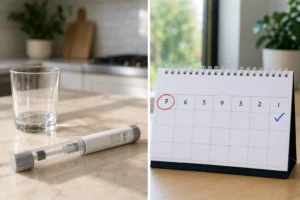
Semaglutide, tirzepatide, and similar GLP-1 medicines slow stomach emptying significantly. Most gastroenterologists ask GLP-1 patients to hold the dose the week of the procedure and to extend the clear-liquid fast to 8 hours. Tell us if you take any GLP-1 medication when you schedule.
Iron, NSAIDs, Antacids, Pepto Bismol
Iron tablets stain the lining and obscure the view; stop 7 days before. NSAIDs (ibuprofen, naproxen) increase bleeding risk if a polyp or biopsy is needed; stop 5 to 7 days before. Antacids and Pepto Bismol coat the stomach lining; stop 24 hours before.
Medications You Can Keep Taking
Tylenol (acetaminophen) is generally safe up to 4 hours before with a small sip of water. Most blood pressure and heart medications should be taken on schedule with a sip; confirm with the office.
When to Call Us Right Away
Call our office at (718) 261-0900 if you experience any of the following before or after your endoscopy:
- Vomiting that will not stop or contains blood
- Severe chest, throat, or abdominal pain that is not just a sore throat
- Black, tarry stools or blood in the stool
- Fever above 101 F (38.3 C)
- Difficulty breathing or swallowing
- Signs of aspiration: cough, shortness of breath, chest tightness in the hours after sedation
Severe symptoms warrant an immediate trip to the emergency room.
What Conditions an Upper Endoscopy Can Diagnose
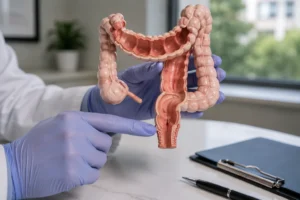
An upper endoscopy can detect or rule out a wide range of upper GI conditions, including gastroesophageal reflux disease (GERD), peptic ulcers, esophagitis, Barrett’s esophagus, hiatal hernia, gastritis, celiac disease, esophageal varices, ulcerative colitis involvement of the upper tract, and tumors of the esophagus, stomach, or duodenum. If you have unexplained pain in the upper stomach, persistent reflux, or difficulty swallowing, an upper endoscopy is often the first diagnostic step. For background on indications, see why do I need an upper endoscopy. If your physician has suggested a less invasive alternative for the small bowel, you may also be a candidate for capsule imaging; see whether you can eat or drink anything before your endoscopy if a capsule study is part of the plan.
Visit Gastroenterology & Nutrition P.C. in Forest Hills, Queens
If you have questions about your upper endoscopy prep, fasting timeline, or whether you can take a specific medication, our team can walk you through it. Dr. Samuel Davidoff and the gastroenterology team at Gastroenterology & Nutrition, P.C. have served the Forest Hills community for over 20 years. You can schedule your upper endoscopy directly from our procedure page, or review the full endoscopy prep instructions before your visit.
Address: 108-16 72nd Avenue, 2nd Floor, Forest Hills, NY 11375
Phone: (718) 261-0900
Hours: Sunday 9 AM to 1 PM, Monday/Wednesday/Thursday 9 AM to 5 PM, Tuesday/Friday 9 AM to 4 PM
Neighborhoods we serve: Forest Hills, Rego Park, Kew Gardens, Elmhurst, Jackson Heights, Middle Village, Ridgewood, Astoria, Flushing, Richmond Hill, Glendale, and surrounding Queens communities. Our Forest Hills office offers same-week scheduling, Sunday hours, and Spanish-speaking staff.
Frequently Asked Questions
How many hours before an endoscopy can I drink water?
Most gastroenterologists ask you to stop drinking water 2 hours before your scheduled arrival time, with no solid food for at least 8 hours before. If you take essential morning medications, you may take them with a small sip of water up to about 4 hours before, only if your doctor has cleared this. Always confirm the exact cutoff with the office that scheduled your procedure.
Can I drink water 2 hours before an endoscopy?
No. The standard fasting rule is to stop all liquids, including plain water, at least 2 hours before your arrival time. Drinking inside the 2-hour window raises the risk of vomiting and aspiration during sedation, and your procedure may be delayed or rescheduled.
Can I drink water 4 hours before an endoscopy?
In most cases, yes, a small sip of water to swallow critical morning medications is allowed up to about 4 hours before the procedure. Plain water is preferred over juice or coffee. Confirm with our office before you take any meds the morning of.
What happens if I accidentally drank water before my endoscopy?
Call your gastroenterology office immediately and tell them exactly how much you drank and at what time. If it was a small sip more than 2 hours before your arrival, the procedure usually proceeds as planned. If you drank within the 2-hour fasting window, the doctor may delay or reschedule the procedure to prevent aspiration during sedation.
When should I stop drinking water before an endoscopy?
Stop all liquids, including water, 2 hours before your arrival time. Stop solid food at least 8 hours before. Patients on GLP-1 medications such as Ozempic or Wegovy should stop drinking 8 hours before because these drugs slow stomach emptying.
Can I take my morning medications with water before an endoscopy?
Yes, in most cases you may take essential medications such as blood pressure or seizure medication with a small sip of plain water up to 2 hours before your arrival. Do not take blood thinners, diabetes medications, GLP-1 medications, iron, antacids, or Pepto Bismol without first confirming with our office.
This information is provided for educational purposes and is not a substitute for professional medical advice, diagnosis, or treatment. Please schedule a consultation with our team to discuss your individual needs.